

Monday, October 13, 2014
Wednesday, October 8, 2014
Bonus! - John Wick Is Awesome
I once considered designing my own rpg system. When I got to magic, my brain burned itself out. I mean it. Every waking moment was consumed with magic design concepts, "feels", philosophies, and a never ending string of mathematical probabilities and die mechanics as I tried to "regulate an imaginary and metaphysical trope within the bounds of a simplified rules system".
Then when my brain had turned to molten lead, I said "Screw this. I need to play." And I went looking for a game system that did what I wanted. That's when I discovered Savage Worlds.
This new article by John Wick has me thinking about plunging into the torrid fires of game design once again.
Go. Read. Maybe it will change your perceptions of RPGs as much as it has changed mine.

GM Wednesday! - I Forgot To Bring the Dingus
I'm going to pick on Pathfinder and D&D here, but this can be true of any game system. It's just very prevalent in these systems.
Specifically this is about monsters that are more or less immune to damage unless you use the right weapon. In Pathfinder and D&D it's called Damage Resistance (DR for short). The other day my rather low level party and I were fighting a Succubus which has a high DR except against Cold Iron. Being low level there was little chance of hurting it without these weapons. I'd also like to point out that this was a scenario approved by Paizo for Pathfinder Society.
So we got our collective butts kicked and we ran. Once outside we healed up, went to the nearest shop and bought a bunch of cold iron weapons, and came back the next day. She was still there, the monsters we slew to get to her were still dead, the traps still disabled. It was like a video game. Anyway, once we had the cold iron she lasted only two rounds.
That just seems silly. I feel like I need to have a variety of swords on a keychain just to go adventuring because if I don't have the right weapon, I'm useless. I'd need a standard weapon, silver weapon, cold iron weapon, and adamantine weapon to effectively adventure. My hero would need a golf bag full of swords.
This is, in my opinion, bad game design. I get that a monster might have weaknesses (as they do in mythology) but making them nigh immune to everything else forces unprepared players to be sidelined. Even if I could buy all the necessary weapons, I could never carry them all due to the encumbrance rules. I suppose that's why the bag of holding is so popular.
I see this happen sometimes with GMs in other systems that make their own home brewed monster. They want it to be a tough fight, so they make the monster immune to any attack except for the specific tactic they have in mind. Sometimes this works, such as "To kill the monster, you have to target a specific vulnerable area." - Tough but fair. My character is not rendered impotent, he just has to attack a hard to hit spot.
I guess what I am saying is that surviving the encounter shouldn't be based solely on my shopping list.
Edit: So I just played a Pathfinder Society Module that highlighted this problem enormously. It was full of Fey and we just happen to have several characters with cold-iron weapons. If we didn't have these weapons, the adventure would likely have killed the whole party. But because we did have these weapons, no creature lasted into the second round. As for my Cleric, my initiative was so poor I didn't get much chance to act. I burned maybe two channels the whole adventure for healing.
I.....was......bored.....
Monday, October 6, 2014
Adventure Monday! - Planet Ursae
When the trade-lanes shift, foolish worlds will suffer...
Welcome to Planet Ursae, you will not be staying long. Please stay withing the red-dotted lines on your guest map. Your life will depend on it.

Welcome to Planet Ursae, you will not be staying long. Please stay withing the red-dotted lines on your guest map. Your life will depend on it.
Wednesday, October 1, 2014
GM Wednesday! - Surrender?
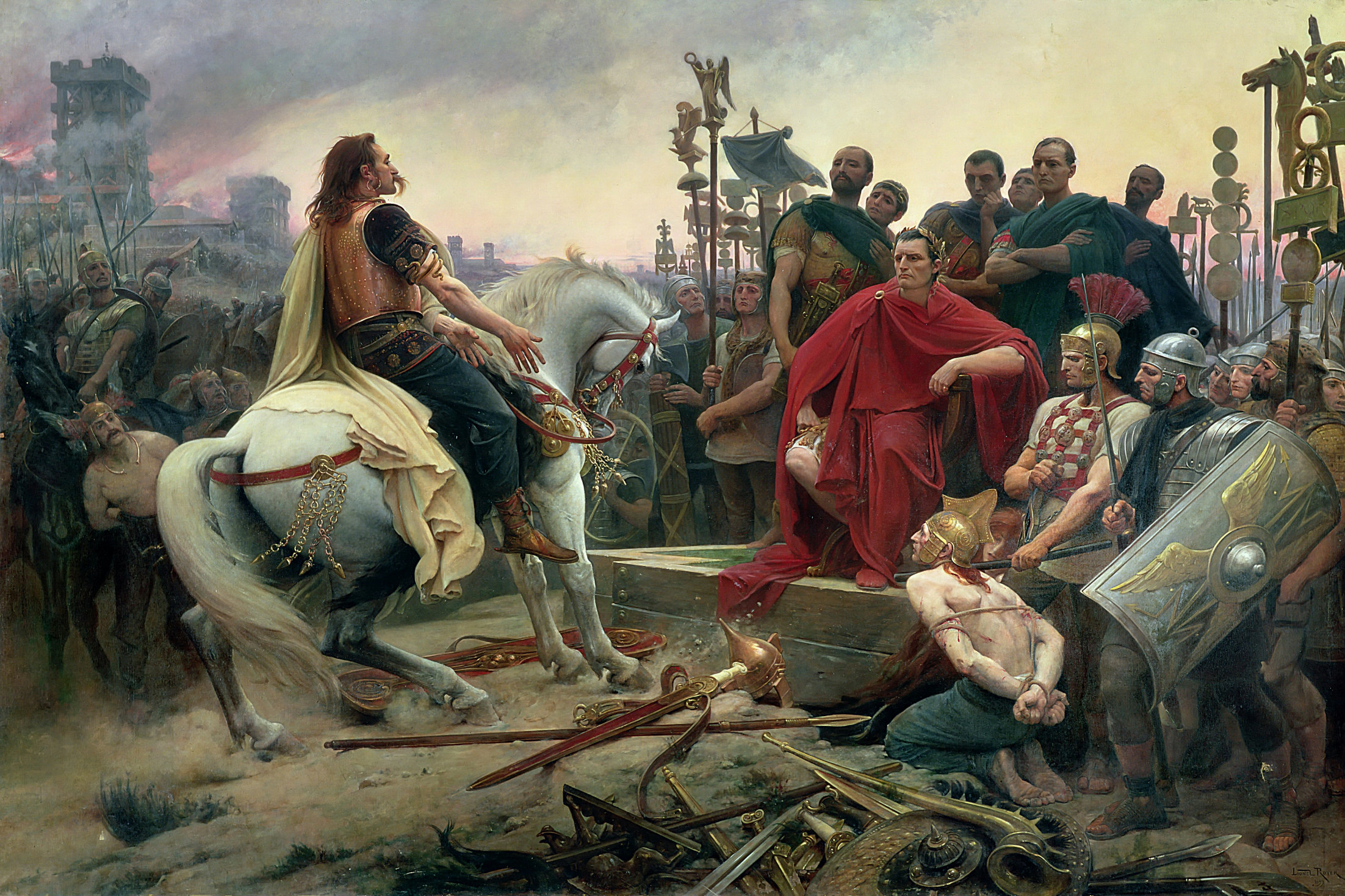
Let's talk about that one thing that players always refuse to do: Surrender.

Believe me, I get it. I cut my teeth on Basic and AD&D with a sadistic older brother as GM. As he got older he only got more devious. His favorite was designing traps that gave the player no chance at a saving throw.
Back in the day the focus of an RPG wasn't story since there was little to none. The focus of D&D was dungeon crawls and a GM earned his chops by making them as dangerous as possible. The greater the difficulty in the Death Maze, the more infamous the Dungeon Master. And then along came the Tomb of Horrors by Lord Gygax himself and he put as all to shame.
What resulted was a mistrust of the GM. If the player gave the GM an opening, it was expected that the GM would kill you with it. There are still some GMs that play this way today, and I think it has left an indelible stamp on the player psyche.
Disclaimer: I'm not a psychologist. I am a gamer-blogger. I can spout my opinions on the net but that doesn't make them fact.
So as a result, when the villain has a hostage and the heroes are outnumbered, and when he gives them the chance to surrender, the players would rather die fighting than drop their weapons.
BUT...
...surrender and capture is a staple of story.It should be in the Player/GM toolbox. Here's some examples:
The fact is that getting captured can forward the story, give the heroes some much needed information, and gives them that awesome experience of escaping when put in "an easily escape-able situation involving an overly elaborate and exotic death."~ Dr. Evil
There is also the view that such a scene is very rail-roady. Yes, it is a pre-planned scene but it doesn't have to be rail-roady. If the players choose to fight, let them. However, the bad guy and his minions should technically be on Hold, and expecting that the heroes will do something stupid. The heroes might be able to take on all of the bad guys but the hostage is going to die, and that will tarnish the reputation of the heroes (provided they have a good reputation). This isn't railroad, this is a player choice that had obvious consequences.
Thrilling Tales for Savage Worlds (Adamant Entertainment) discussed the subject of Surrender and advised that such a scene be obvious (that the heroes are out-matched) and that each hero be awarded a benny for playing along. It's an idea I use with all of my games.
Believe me, I get it. I cut my teeth on Basic and AD&D with a sadistic older brother as GM. As he got older he only got more devious. His favorite was designing traps that gave the player no chance at a saving throw.
Back in the day the focus of an RPG wasn't story since there was little to none. The focus of D&D was dungeon crawls and a GM earned his chops by making them as dangerous as possible. The greater the difficulty in the Death Maze, the more infamous the Dungeon Master. And then along came the Tomb of Horrors by Lord Gygax himself and he put as all to shame.
What resulted was a mistrust of the GM. If the player gave the GM an opening, it was expected that the GM would kill you with it. There are still some GMs that play this way today, and I think it has left an indelible stamp on the player psyche.
Disclaimer: I'm not a psychologist. I am a gamer-blogger. I can spout my opinions on the net but that doesn't make them fact.
So as a result, when the villain has a hostage and the heroes are outnumbered, and when he gives them the chance to surrender, the players would rather die fighting than drop their weapons.
BUT...
...surrender and capture is a staple of story.It should be in the Player/GM toolbox. Here's some examples:
- James Bond: He gets captured in every single movie! Bond uses the opportunity to get a look at the BBEG and maybe get the villain to expose his plan.
- Frodo: Got captured in every single movie! In order: by Strider, the elves, by the men of Gondor, by Shelob, and by the Orcs of Mordor.
- Indiana Jones: He get's captured in every single movie!
The fact is that getting captured can forward the story, give the heroes some much needed information, and gives them that awesome experience of escaping when put in "an easily escape-able situation involving an overly elaborate and exotic death."~ Dr. Evil
There is also the view that such a scene is very rail-roady. Yes, it is a pre-planned scene but it doesn't have to be rail-roady. If the players choose to fight, let them. However, the bad guy and his minions should technically be on Hold, and expecting that the heroes will do something stupid. The heroes might be able to take on all of the bad guys but the hostage is going to die, and that will tarnish the reputation of the heroes (provided they have a good reputation). This isn't railroad, this is a player choice that had obvious consequences.
Thrilling Tales for Savage Worlds (Adamant Entertainment) discussed the subject of Surrender and advised that such a scene be obvious (that the heroes are out-matched) and that each hero be awarded a benny for playing along. It's an idea I use with all of my games.
Convincing Your Players
No doubts about it, this is a trust issue and needs to be discussed out of game. It may even belong in the social contract, with the deal being:- The Players will consider surrender a viable option in game play, especially when it is dramatically appropriate with the understanding that not every fight can be won.
- In return you as the GM promise that if the heroes surrender to the villains, said villains will not pull a gun and immediately eliminate the heroes, that the villain will want to question or toy with the heroes, that the scene will be used to forward the plot, that the heroes will have the opportunity to attempt an escape, and the players will receive a benny in payment for their cooperation.
Monday, September 29, 2014
Adventure Monday! - Planet Qalesh
Not exactly a nice place to go skiing...Planet Qalesh!

This one explains the difference between a spacesuit and a pressure suit.
This one explains the difference between a spacesuit and a pressure suit.
Wednesday, September 24, 2014
GM Wednesday - Shaken Effect
Let's talk "Shaken". There are people out there who are playing Savage Worlds and believe that Shaken means "Stunned". This is a mistake.
Stunned is usually interpreted as the character loses the ability to act as a result of loss of physical or mental faculty.
Shaken does not mean that you have to stand there dumb-founded with drool coming out of the corner of your mouth. You can still take free actions when Shaken. You can still dive for cover.
Here's some examples of what Shaken can mean.
Shaken is the name of the mechanic used to simulate all of these responses because mechanically they can all be handled with the same rule, and because the cure for each of these conditions is for your "chutzpah" to override your brain's fear or shock and get you back into the action. Thus a Spirit roll breaks you free.
1) Spirit is not a dump stat. There are no dump stats in Savage Worlds.
2) Combat Reflexes is an edge that grants you +2 to your Spirit roll to get out of being Shaken.Leadership Command grants a +1 to all of your allies within a certain range.
3) A player can roll Spirit, and if he fails he can then immediately spend a Benny to remove the Shaken status and act that round. You don't have to choose to spend the Benny before you roll. You can always spend that Benny, even if you fail the roll.
4) As GM, you should not be stingy with awarding Bennies. I'll talk about Bennies more in my next post, but suffice to say that they shouldn't feel the urge to hoard them for soak rolls.
That said, I have had player succeed on his Spirit roll but have to wait for the next round to get unshaken. In the meantime they get shaken again by the enemy's attack. Yes it can be frustrating and there are a couple of house rules you might like if you are having this problem with your group.
a) Character's can take actions, except at a -4 penalty while Shaken. It's a harsh penalty but some people like the idea of having an outside chance as opposed to no chance at all.
or
b) Have a Success on a Spirit roll remove the Shaken status so that characters can act immediately instead of requiring a Raise.
Despite the outcries of "Stun-lock", I find the Shaken mechanic a valuable rule set. It allows suppressive fire to work, the heroes to keep a very tough enemy on the ropes while they formulate a plan, and it gives the creative loudmouth a way to contribute in combat. Remember that before you decide to remove the Shaken mechanic as a fix.
Speaking of system fixes, I give Savage Worlds props. I tinker with every system I get my hands on because they do stuff that just didn't make sense or could be done better. Savage Worlds really didn't look like it made sense when I first read through the book, but every change I made to the system I ended up reverting because the way it was written in the rules just worked better.
Stunned is usually interpreted as the character loses the ability to act as a result of loss of physical or mental faculty.
Shaken does not mean that you have to stand there dumb-founded with drool coming out of the corner of your mouth. You can still take free actions when Shaken. You can still dive for cover.
Here's some examples of what Shaken can mean.
- The enemy unloads the full magazine of a Machine Gun in your direction. Your sense of self preservation is prohibiting you from poking your head out to return fire.
- The boxer who is being pounded by savage blows from his opponent finds that he can only curl up defensively against the ropes until the referee calls for the fighters to separate.
- You get clocked upside the head and are dazed for a moment.
- You are a victim of a Taunt so withering that your brain locks up for a moment as it is overwhelmed with rage or shame.
- You see something so horrific that your brain decides that running away is smarter than getting within it's reach.
- You are attacked by a man wielding "poo on a stick". It's not scary, but you can't override your revulsion to counter attack.
Shaken is the name of the mechanic used to simulate all of these responses because mechanically they can all be handled with the same rule, and because the cure for each of these conditions is for your "chutzpah" to override your brain's fear or shock and get you back into the action. Thus a Spirit roll breaks you free.
Stun-Lock
There has been accusations that the Shaken mechanic can keep a player out of the fight by keeping them perennially Shaken. I experienced this as well when I was a novice GM. There are ways to mitigate this.1) Spirit is not a dump stat. There are no dump stats in Savage Worlds.
2) Combat Reflexes is an edge that grants you +2 to your Spirit roll to get out of being Shaken.
3) A player can roll Spirit, and if he fails he can then immediately spend a Benny to remove the Shaken status and act that round. You don't have to choose to spend the Benny before you roll. You can always spend that Benny, even if you fail the roll.
4) As GM, you should not be stingy with awarding Bennies. I'll talk about Bennies more in my next post, but suffice to say that they shouldn't feel the urge to hoard them for soak rolls.
That said, I have had player succeed on his Spirit roll but have to wait for the next round to get unshaken. In the meantime they get shaken again by the enemy's attack. Yes it can be frustrating and there are a couple of house rules you might like if you are having this problem with your group.
a) Character's can take actions, except at a -4 penalty while Shaken. It's a harsh penalty but some people like the idea of having an outside chance as opposed to no chance at all.
or
b) Have a Success on a Spirit roll remove the Shaken status so that characters can act immediately instead of requiring a Raise.
Despite the outcries of "Stun-lock", I find the Shaken mechanic a valuable rule set. It allows suppressive fire to work, the heroes to keep a very tough enemy on the ropes while they formulate a plan, and it gives the creative loudmouth a way to contribute in combat. Remember that before you decide to remove the Shaken mechanic as a fix.
Speaking of system fixes, I give Savage Worlds props. I tinker with every system I get my hands on because they do stuff that just didn't make sense or could be done better. Savage Worlds really didn't look like it made sense when I first read through the book, but every change I made to the system I ended up reverting because the way it was written in the rules just worked better.
Subscribe to:
Posts (Atom)